Thursday, February 4, 2021

Imaginative Arts Journeyman Month 4


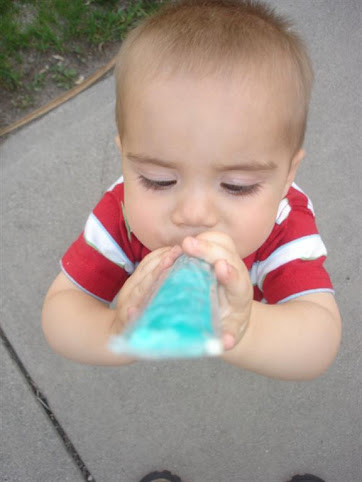
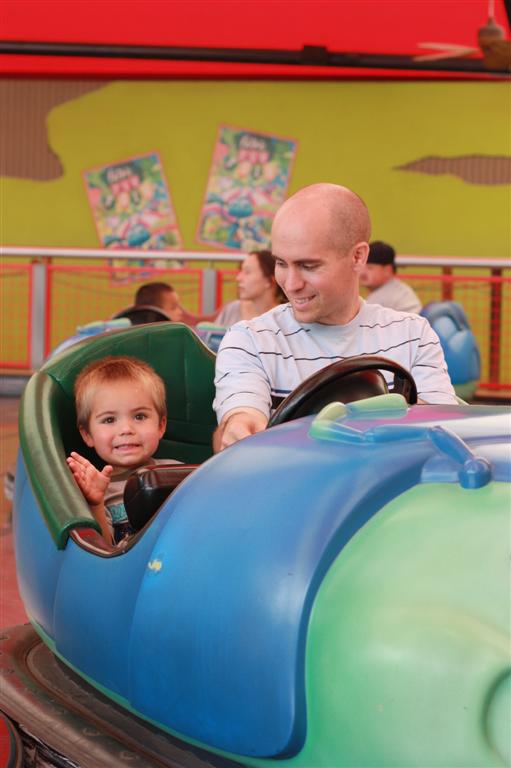
We've reached one of my favorite topics in photography: How to take beautiful candids. I take and share photos all year long and do you know the ones that get the most response from family and friends? The candids. 

It's no wonder that these are the favorites; seeing people laughing or caught in a beautiful moment or living a joyful life evokes feelings in the viewer. They see themselves in that moment or remember a similar experience or FEEL a bit of the feelings that are captured in the photo. 

The key to candids is being prepared to take a picture. Figure out your lighting, your settings, pay attention to your background and where you want to stand and then let the people do their thing while you unobtrusively take photos of it :) When the light + the action + the emotion are all top notch you'll find that you captured some of your all time favorite photos. 

ASSIGNMENT #1: READ THIS ARTICLE ABOUT CANDID PHOTOGRAPHY


Now all candids don't have to be this action packed, but those are some of my favorites :) 
Another type of candid is what I call the "faux candid." This simply means YOU set up an opportunity to capture people acting naturally ... but it's fake ... but it's not :D For example, asking the person you are taking pictures of to DO something or to INTERACT with others in some way can create a much more interesting photo. In the picture of Melody with her cousin it was easier to ask them to give each other a huge hug then to try to get a non-cheesy/fake, holding-still-smile. A snapshot became a little bit better by turning it into a faux candid. 
I ALWAYS work faux candids into photo sessions and they add a lot of variety so you can capture more than just posed and styled photos. Ask the people in the photo to hug, to laugh, to jump, to walk .... there are so many options! What actions can you add to the list?

ASSIGNMENT #2: Make a list of TEN photo action/interaction prompts you can use when taking photos. Sorry, you don't get to use hug, laugh, jump or walk since I already shared those! 
We'll be sharing our ideas in class. 


ASSIGNMENT #3

Take a GREAT candid photo of someone. Pay attention to your light and composition, we are building on our skills so don't leave those out. 
Before noon on Wednesday email me your BEST photo. If you send me more than one I'll pick the one I think is the best for the slideshow. 
There will be winners and the way to win is to show a photo that had thoughtful/intentional lovely light, solid composition and a great candid. Go for the gold and shoot for having ALL THREE elements in your photos!


Imaginative Arts Apprentice

Study/Learn: 
Choose one of these 10 things questions to answer from the book, "Percy Jackson." Be prepared to share your answers.

  1. Percy says his mother was the best person ever and he’d never heard her raise her voice or say one unkind word to anyone. Do you think that’s realistic? Why or why not?
  2. Mr. Brunner (Chiron) made things like Roman armor interesting to his students. If you could acquaint others with something you’re passionate about, what would it be and how would you introduce it to them?
  3. A deleted scene was released when the Percy Jackson facebook page reached one million “likes.” The scene involved an initiation of Percy into camp life. The Camp Half-Blood campers picked up Percy and made him kiss the boar head on the Ares cabin before dumping him into the lake. Have you ever been the “new kid” someplace? If so, what was your experience like?
  4. Chiron says, about the effects of Mist: “Remarkable, really, the lengths humans will go to fit things into their version of reality.” How is that true in the story? What about in real life?
  5. Were you surprised when it’s discovered that Percy is Poseidon’s son? Give examples from the text where hints were dropped.
  6. Imagine you’re a half-blood. Write an account describing your arrival at Camp Half-Blood and how you would come to learn which god is your parent.
  7. There are many humorous passages in the book. Describe some of your favorites.
  8.  Author Rick Riordan’s website contains classroom activities based on the book. One of his suggestions is to write character letters, where students write letters from one character to another. For instance, he says: “Clarisse wrote her dad Ares, telling him to stop being a bully. Percy wrote a letter to his mom, promising to save her. Grover wrote a letter to Chiron, explaining why he should get his seeker’s license to find Pan.” Which characters would you have exchange letters and what would the letters say
  9. Do you sympathize with the betrayal Luke felt? Why or why not?
  10. A movie based on the book was released in February of 2010. It was titled Percy Jackson & the Olympians: The Lightning Thief. The film’s plot deviates from the book’s but is still considered a faithful adaptation. Watch the movie for yourself and compare it to the book.
Know/Understand:
  • Get together with your culture groups either in person, or on zoom, or on the phone, or whatever.  
  • You should have all the final touches to your culture completed before coming to class.  
  • Bring all of your culture pieces that you have created.
  • Someone from your group needs to bring a shovel.  (I'm sure Martin's have a couple shovels, but not 6!  So bring one!)

Become/Serve: It's almost Valentine's Day!  I love celebrating holidays.  I love dressing up for occasions.  I love serving. I love you!  

Do one of the following:
  1. Find a scripture about love.  Write it out in your best handwriting on a nice piece of paper and bring it to display on the wall.
  2. Write a note to a family member telling them how much you love and appreciate them.
  3. Show someone that you love them by completing an act of service.  Make cookies, make their bed, heart attack someone's door, etc.  Maybe you can do this for someone lonely in your neighborhood, for a sibling, or for a friend.


Friday, January 8, 2021

Imaginative Arts Apprentice

 Imaginative Arts


Study/Learn:
Do the following:
1. Study your spelling words for Every Soul a Star.

2. Bring something that represents what you learned from the book.  
This could be 
a story, 
a piece of art, 
an object from home that you can talk about, 
something you have learned from your "labyrinth",  
 or an insight that you may have had.  
Whatever it is, be prepared to share it with the class.

3. Which character are you most like? Why?  Write down your answer in your notebook.

Know/Understand:
Get together with your culture groups.  Make sure you know what you need to bring to class to finish up creating your cultures.  Next month we are burying them!


Become/Serve: 
Do one of the following: 
1. Write a letter of thanks to someone who has influenced your life for good.
2. Find a quote about gratitude and print it out, or write it out in nice handwriting and put it where you can see it everyday.
3. Make a list of all the things you are grateful for.


Journeyman Week #3 Photography


This week in photography we're going to take everything we learned about light + composition and add in the third layer of taking great portraits-- posing like a pro.

The key to posing lies in a few simple tips + an ability to make the people you're taking pictures of feel confidant, good looking and natural in front of the camera (no big deal, right?!)

Study and Learn:

Watch this short slideshow of my most relied upon posing tips. 

WATCH HERE


Next, check out my pinterest page of posing inspiration. I always like to seek out new ideas for posing before a shoot, especially if I'm taking pictures of something I don't do that often (like newborns and weddings). I often write a list of poses I want to try during a photoshoot so that I come prepared to try new things and run out of ideas (I've been at this for 11 years and I still do that). These photos can give you inspiration for your next assignment so take note of what poses you like and why you like them. 
Do these pose examples follow my rules for posing? If they broke a rule, does it still look flattering and natural? Why? 

Know and Understand

1. Take a photo of a person (or persons!) with GREAT posing. Do pay attention to your light and composition. We are building our skills here so don't leave those out.  

2. BEFORE NOON ON WEDNESDAY email me your BEST photo. If you send me more than one I'll pick the one I think is the best to put in the slideshow. As usual I'll be picking a 1st, 2nd and 3rd place and we'll all see one another's photos :) 


Also, has there ever been a more true meme then this one:


Become and Serve

Feeling confident in front of the camera comes from feeling confident in your own skin. I've taken pictures of people of all ages and it's obvious when they don't feel confident in who they are! Loving yourself and knowing your value whether you are dealing with pimples, braces, extra weight or a bad hair day is essential! Our value doesn't come from cute jeans, clear skin or a waistline. Your natural smile, the happiness radiating from your eyes, and your confidence that you look GREAT comes from knowing who you are and loving yourself where you're at. 
Watch this short video and when you are done spend some time journaling about why knowing WHO YOU ARE matters to you. 


Friday, October 30, 2020

Imaginative Arts November

        Imaginative Arts!


1. Book Discussion - What did you like most about Julie of the Wolves?  What did you like least?

Choose one of these questions to answer.  Come prepared to share your thoughts and answers in our discussion.

1. We learn a lot about the Arctic tundra from Miyax and her experiences.  Choose a memorable passage to consider closely.  What does the passage have to say about life on the tundra?

2. Choose an animal and discuss its role in the book.  For example, how does Kapu grow and change?  What is Tournait's role in the story?  Why does Jean Craighead George include so much information about lemmings?  Pose and explore similar questions with regard to the animal of your choice.

3.  The author, is not originally from Alaska but she clearly loved this part of the world and wanted to contribute to the protection and sustenance of its people and environment.  How can this book be read as a call for action?  What moments make you think about the endangered ways of Alaska's indigenous people, the tundra, and Arctic animals?

4. A theme is the overreaching idea in a story.  For example, Julie explores her identity by changing her name, searching for a new home, and choosing between old traditions and new ways of life.  What other themes do you find?

5. Miyax sings two different songs to Amaroq.  How are these songs similar and different?  What is the significance of singing them rather than speaking?

6. We are reminded of Kapugen throughout Julie's time in the wild.  She uses skills she has learned from him.  What does Kapugen symbolize for Julie?  Why do you think she leaves him right after finding him?  Why do you think she turns her boots toward him at the end?

7. Why do you think Julie agrees to marry Daniel?  Why does she leave?  What are her choices at that point in the story?

8. Describe Julie at the beginning of the story versus the end.  What are some moments that change her?  What examples can you cite of Miyax confronting tradition and either refusing it or upholding it?  Jean Craighead George has said that the primary message she'd like young readers to take away from the novel is : "Think Independently." What are some examples of Julie/Miyax thinking independently?

9. What do Amy and her life in San Francisco represent for Julie?  What do you think she meant when she said, "Daylight is spelled A-M-Y"? Do you think she will be in tough with Amy again at the end of the novel?  If she wrote to her at that point, what do you think her letter would say.

10.  How does our vanguard theme of "Patience" play a part in the book?  Give us some examples of how Julie had to be patient.


Culture Projects!


Contact your culture groups and make sure you have your alphabet done.  You should also have a good idea of what you will be putting on your rosetta stone.  You can put your alphabet on it, or you can write a story on it.

You will have most of class time to work within your groups to make artifacts and stone tablets and things with clay.  Clay can get messy, maybe wear clothes that can get dirty.

Become/Serve: 
Our theme this month is patience.  We've heard the phrase before; "Patience is a Virtue." One of the many benefits of being patient is that patience helps us to make better decisions. Patience is the pause that helps us get our thoughts back in order and our feelings under control. ... Another benefit to being patient is that it helps preserve our relationships with those that we care about.

What is one thing that you need to practice more patience with?  Work on that one thing for the next few days.  Write down your experience with practicing patience.


Thursday, October 29, 2020

JOURNEYMAN- IA Week 2


This month we are going to be studying the role that COMPOSITION plays in your photography. Second only to light, composition is what makes your photo a piece of art. Believe it or not the rules for good composition play out whether you are a painter or a photographer and whether your subject is flowers or faces. The principles you are learning this month apply to ALL areas of photography so if you are more inclined to take pictures of clouds rather than babies, you're in luck, these tips will improve your photography in a big way. 


Do the following two things:

FIRST
 Read this article about composition: https://petapixel.com/2016/09/14/20-composition-techniques-will-improve-photos/

SECOND
Write in your commonplace journal the definition for "Composition" and include a bullet point for each of the 20 techniques in the article and define/describe them in your own words or using images you draw to illustrate the technique. 


Complete the following three things: 


FIRST: Because the article you read is referring to landscape photography I want you to now look at all of these portrait photography examples and determine which composition technique is used. Write the answer in your commonplace book, we will discuss in class (hint, certain techniques will be used more than once, some might not be used at all. More than one technique can be seen in some photos):

1.

May 08 005 (Large).jpg


2.

C:\Documents and Settings\Owner\Desktop\Momtography\Composition\05 18 10_3340 (Large).jpg

3.


4.


5.


6.


7.
IMG_1613 (Large).JPG


8.

IMG_8030 copy (Large).jpg


9.

C:\Documents and Settings\Owner\Desktop\Momtography\Composition\IMG_4016 (Large).JPG


10.

11.


12.

13.


14.

15.


16.


17. 


SECOND: 
Take a photo of a person or landscape or anything at all using principles of GREAT COMPOSITION. If you want a chance at winning the competition then pay attention to light. I want you to build on what you've already learned so use great light and great composition and wow me :) 

If you are planning on taking a landscape photo, remember you don't need to travel to some out-of-the-way vista to capture a lovely photo. I've seen gorgeous spots at Salem Pond, there is a spot with a man made lake and mountain view on the road between Stokes in Salem and the Wiggy Wash in Spanish Fork. The field across the street from Stokes has a gorgeous mountain view with horses in a field. These are all places that look magical in either sunrise or sunset light. If you're taking a picture of a person then look at my examples to inspire you. Is there a spot with a bridge, path or stairs to create leading lines? Are there any natural arches, overhanging trees or colorful doors to make a frame-within-a-frame? Can you think of a way to capture a person using negative space or the rule of thirds? How can you use good composition to create a beautiful picture of shiny apples, a vase of flowers or a favorite childhood toy? Composition rules are in every great work of art and every great photograph so look around and be inspired! 


THIRD:

BEFORE NOON ON WEDNESDAY email me your BEST photo. I'm going to be putting these into a slideshow for us to see as a class and choosing a 1st place, Vanbucks winner!


Thursday, September 24, 2020

Imaginative Arts -- Journeyman Week 1


Welcome! I'm so excited for you to begin your photography journey :) I have been taking photos professionally for the past 11 years and teaching photography for almost as long. I have taken a few online courses to hone my skills over the years but give most of the credit to the Provo Library photography section, bloggers and LOTS and LOTS of practice to round out my education. 


First, enjoy this CLASSIC Kodak commercial about the value of pictures. It makes me tear up every time I watch it :D 


1. I put together a video course all about LIGHT. It is the first and most important thing you can learn about to improve your photography.


Watch this entire course, preferably on a COMPUTER screen and not a phone screen -- being able to see the images larger will be helpful. I don't recommend casting this to a TV, I've had mixed results with the light and color coming through correctly. Turn up the light on your monitor screen so you can see the images clearly :) 
**I do ask that you do not share this video with others, teaching photography is usually a gig I get paid to do so I'm only making this content available for free for my fantastic Vanguard families. Thanks!

Watch Light Course Here --- TIP! For the best viewing quality make sure your youtube settings are on 1080HD Quality :) 

2. IF YOU HAVE a DSLR (the big black camera that allows you to switch out lenses), watch this super quick video to find out what settings to use on your camera for the photography assignment. 


3.  This final step is only for students with a DSLR who want to learn how to shoot in manual (complete control over the camera). This is NOT required watching for students who are only taking this class for fun without any interest of improving their photography beyond our monthly class (and that's ok!). This video has a lot of photographer jargon in it that you will need to know if you want to shoot in manual. The video is so well done and explains things is a simple way but still, you're going to need to take notes and ask questions (text me if you're gung ho to understand and apply before class, or just bring your questions to class). 


1. Take a photo of a person (or persons!) with good indoor light. Do pay attention to your background and how you fill the frame with the person but focus on light most of all. 

2. Take a photo of person(s) with great outdoor light. Wow me! Don't just stand in the shade in front of a brick wall, head out at sunset and find BEAUTY in light. Look for eyelights, purposefully choose a background and show me some diffused light portraits!

3. BEFORE NOON ON WEDNESDAY email me your BEST photo (either indoor OR outdoor). I'm going to be putting these into a slideshow for us to see as a class and choosing a 1st place, Vanbucks winner! 


If you watched my video on light then you know that one of my favorite names for the Savior is the Light of the World so I would like you to watch this three-part video series from Elder Bednar all about the Light of Christ. Watch these videos, even if you've seen them before, and as you go through your week of becoming a noticer of light -- the light in the trees, in your home, on the faces of the people you love -- ponder on how your knowledge of the light of Christ makes a difference in your life.